Port of Cromarty Firth warns Highlands cruise levy could be damaging for Highland businesses and communities
The introduction of a Highlands cruise levy could have a damaging impact on the regional economy, potentially costing businesses millions of pounds in revenue and adversely affecting the communities that heavily rely on the money tourism brings, the Port of Cromarty Firth warns.
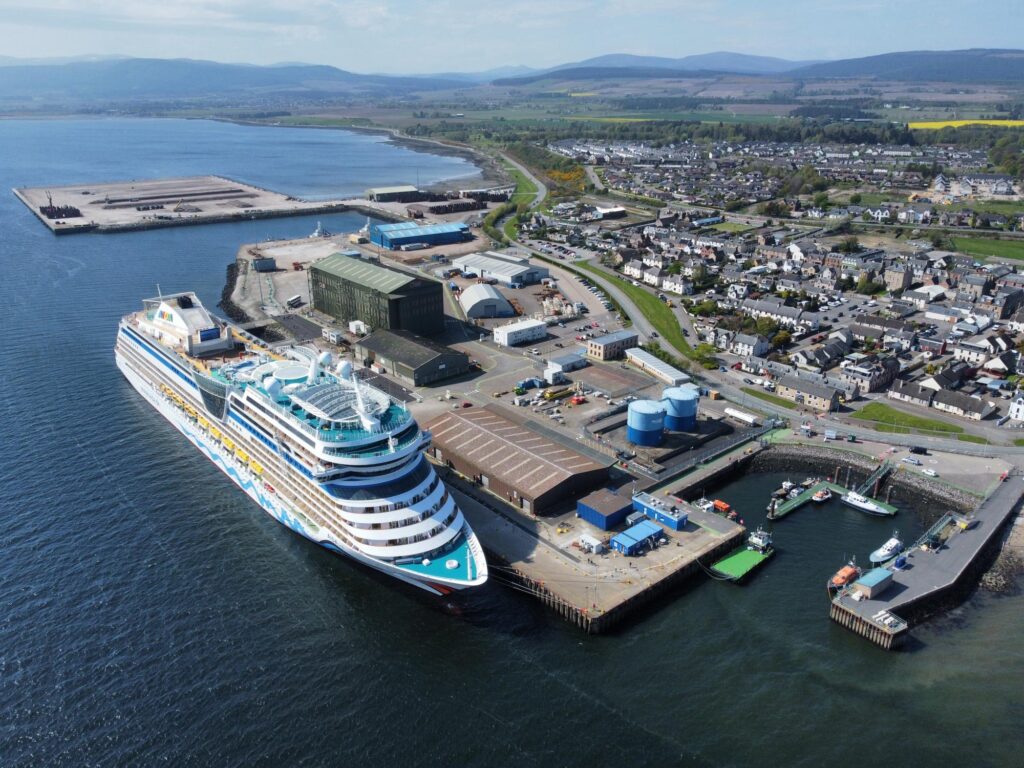
Scotland and the UK is currently one of the most visited countries globally. Last year’s figures for cruise at Invergordon alone saw over 100 ships calling at the Port, carrying more than 213,000 passengers. Cruise passengers contributed an estimated £19 million in direct spend to the Highland economy.
Responding to the Scottish Government’s request for information on its cruise levy consultation, Port of Cromarty Firth says the decision to tap into this key driver of economic growth by raising a projected minimum £5 levy on each cruise passenger coming ashore is a false economy.
Figures compiled by the Port show the amount of money raised for the local authority by introducing the additional local tax would have a net negative impact on the Highland economy. This is because the amount of cash raised through the introduction of a cruise levy would be considerably outweighed by a much bigger drop in regional income as a result of an inevitable slump in ship and passenger numbers due to the new tax being applied.
Leading industry body Cruise Line International Association (CLIA) carried out research that found disembarking cruise passengers each spend a minimum of £100 per port visit.
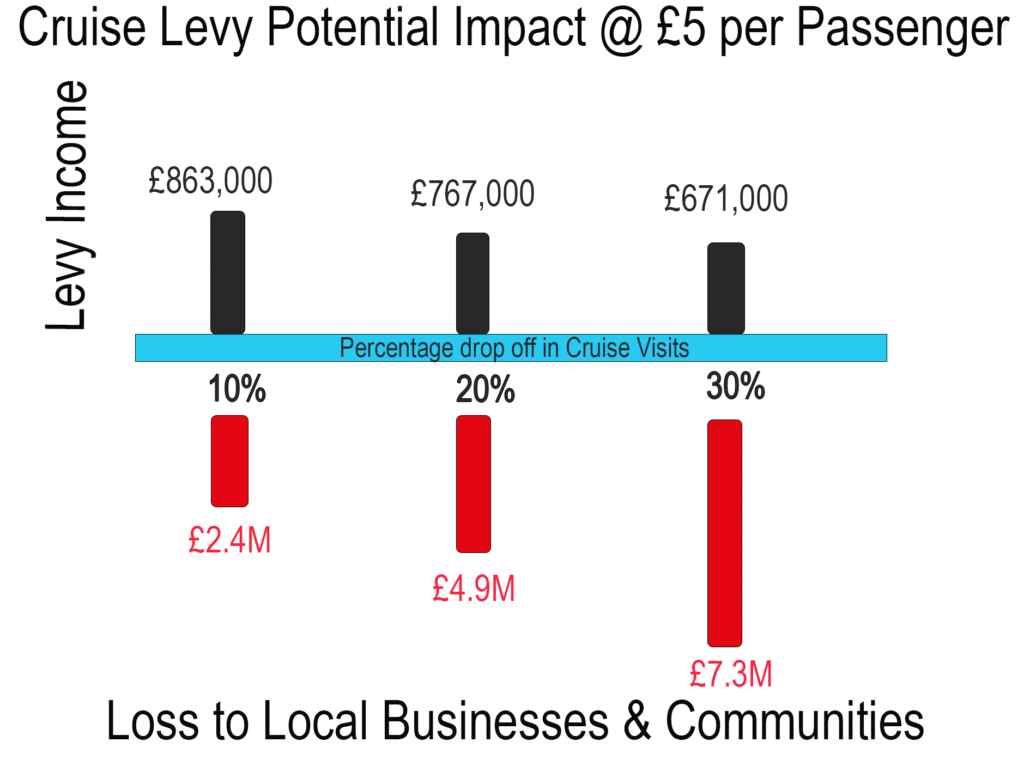
The Port has calculated what the benefit and impact will be if a levy of £5 per passenger is imposed. Based on its 2024 passenger figures a £5 levy would increase port costs to visiting cruise ships by 23% and the Port therefore predicts that a 10% reduction in ships would be a ‘best case scenario’. In this scenario, The Highland Council in 2024 would collect £863,000, whilst a 10% reduction of ships due to the imposition of a levy would result in a corresponding revenue drop to Highland businesses and communities of £2.4 million.
If the levy sparked a 20% reduction in cruise ship numbers to the Highlands, the revenue collected would fall to £767,000 for The Highland Council, but the financial hit to the region would double to £4.87 million.
Finally, a 30% reduction would result in a levy revenue to The Highland Council of just £671,000, while the loss to Highland businesses and communities would soar to £7.31 million.
Alex Campbell, Chief Executive of Port of Cromarty Firth, said: “Our figures show that the cruise levy would not benefit the Highlands, but rather the introduction of this additional tax would adversely affect businesses that rely on income from tourism, and damage our communities who already find skilled labour hard to come by. The impact would disproportionately fall on smaller businesses and seasonal workers, such as shop owners, tour guides and taxi drivers.
“If the Highlands introduces a levy locally while other areas visited by cruise ships do not, this will displace visitors and revenues to other parts of Scotland with the local Highland communities losing out.
“The cruise industry makes a much-needed multi-million pound contribution to the Highland economy every year and provides a vital source of income to a wide range of businesses. In turn, through the wages of workers and employees and the profits generated by the supply chain that benefits from cruise, it raises tax revenues for Scottish and UK Governments.
“The Port of Cromarty Firth does not understand the economic rationale for bringing in a local cruise levy. We believe that, far from benefiting our nation, it will in fact harm the reputation of Scotland as a tourist destination. Further, as an additional tax that is difficult to administer and collect, it will only damage relations with cruise operators. Therefore, we urge everyone to think again.”